
The government is planning to extend the electronic modes of tax payment to its own payments platform, Unified Payments Interface (UPI), credit cards of banks, or even a mobile wallet like Paytm.

The reduced growth is largely because of consumption slowdown and tax rate cuts.
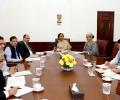
The aim of the exercise was to further simplify GST forms and make the filing process more user-friendly, the finance ministry said in a tweet, reports Dilasha Seth.

Govt may tighten presumptive taxation norms and also do away with some deductions.
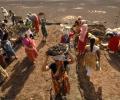
Sources said the rural development ministry has sought an additional Rs 20,000 crore for MGNREGA for 2019-20 over and above the budgeted Rs 60,000 crore for 2019-20. Though, all of the PM-KISAN savings may not be transferred to fund MNGREGA's extra needs, sources said a part of this could be transferred.

Collection will have to rise by 30 per cent in the remaining period of the financial year to achieve the Budget estimate.
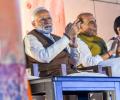
Dissatisfaction with the state leadership, along with caste and sectarian factors and economic issues -- particularly those relating to jobs and rural distress cost the BJP.

Although demonetisation and improper implementation of GST along with falling prices are being blamed for much of the distress in rural India for some time, experts believe those may not be the only reason.
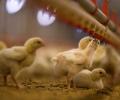
A data shows the number of backyard poultry has risen by 46 per cent between 2012 and 2019. The development is extremely positive because it provides an incentive for small and marginal farmers to rear birds.

The properties the government is eyeing to dispose of this year are located in prime locations of cities like Delhi, Mumbai, Surat, Ahmedabad, Bengaluru and Chennai.

As the number of cross-bred female cattle rise, the entire concept of lean and flush seasons for milk will go away, as these animals give similar quantities in all seasons.

The BJP's effort comes in the wake of Commerce and Industry Minister Piyush Goyal set to attend the eighth RCEP ministerial meeting in Bangkok from October 10 to 12.

The intention of the government is to cap prices of drugs that are essential and which the public widely uses.

Divestment in BPCL, SCI, Concor, NEEPCO, and THDC would help the Centre keep its fiscal deficit in check in the wake of subdued tax revenues and a Rs 1.45-trillion hit for the exchequer from corporation rate cuts.

Among possible new members, former chief economic advisor Arvind Virmani's name is doing the rounds.
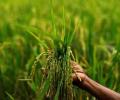
However, the estimates could change in the coming months, as full impact of excess rainfall and floods on the standing soybean and urad crops in central and western India in late August and September has not yet been fully taken into account.

The immediate revenue loss could worsen the Centre's fiscal deficit, from the budgeted 3.3 per cent of gross domestic product (GDP) to 3.7 per cent of GDP -- a massive 40-basis-point increase. It was stabilised at 3.4 per cent since 2016-17, report Abhishek Waghmare and Dilasha Seth.
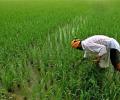
It has decided not to levy the 2 per cent tax deducted at source (TDS) on cash payments above Rs 1 crore made through Agricultural Produce Market Committees.

Facing a deepening slowdown, the auto sector is pinning hopes on the GST Council meeting on September 20 for a rate cut from 28 per cent to 18 per cent. However, states including Bihar, West Bengal, Kerala, and Punjab are of the view that the slowdown in the auto sector is not because of the GST rate but structural issues in the economy.
This should augur well for the rabi crops as delayed withdrawal will leave enough moisture in the soil for early sowing.
